The Stigma With Celiac Disease
The Stigma With Celiac Disease
When you tell people you have celiac disease it gets taken so out of hand. Some will ask what will happen with you, some will ask about your diet, and some will assume that it is a weird and fake thing to have. People also think that it is ok to say to restaurants that they have celiac when they really don't, and it makes it harder for the people with it because then less people start to believe that people really do, making it harder to make sure their food is safe to consume.
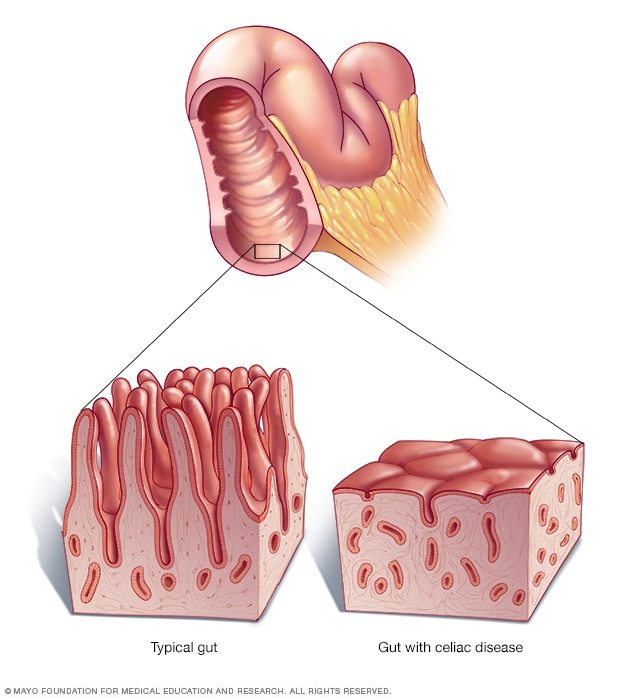
Celiac disease is an autoimmune disorder that is in genetically predisposed people. This happens when the ingestion of gluten leads to damage in the small intestine. Even though, many people probably have heard of this disease, but don't know how common it really is to has. In women it is 17.4 in 100,000 people, men is 7.8 in 100,000 people, and in children it is 21.3 in 100,000 people. Evidence is starting to show that there is an increase of 7.5% over the past few years. It is found in food (like bread, cake, cookies, pretzels, etc.), but can also be found in drinks, soap, handsanitizers, cleaning products, and hair products.
What people may be asking is how do I know if I have it? There are a few symptoms to get an idea if something is going on, some of them are diarrhea, fatigue, weight loss, abdominal pain, bloating and gas, nausea and vomiting, and constipation. Some more severe symptoms are anemia, loss of bone density, joint pain, and elevated liver enzymes. Even though you may have these symptoms, the only real way to know is if the patient goes to their doctors and the doctor sets up and gets an endoscopic test for the patient.
Now, some maybe asking " why is it such a big deal to say I have celiac disease when I really don't?" The reason for this is because is someone does do this and the restaurant finds out it wasn't such a big deal, then the wait staff may not take as many precautions with the person's meal or not really believe them and get snarky with the restaurant goer. This is a bigger problem because if someone with celiac disease even gets the tiniest bit of gluten they can get severely sick and not be able to function properly, or even get hospitalized.
People would not also think about this, but schools don't all the time follow or believe the student that they have celiac which could lead to bigger problems for the student and the school. A perfect example of this happening is from an article called " Student files discrimination lawsuit against University of Maryland, alleging gluten exposure." In this article a student at the University of Maryland sued the college for repeatedly being given gluten contaminated food when the staff were told numerous times that the student had a severe gluten allergy. Even one time when this happened, the student ended up in the hospital. It was also said that the staff didn't know that some of the stuff contained gluten and that they do not take food allergies seriously at their campus. This is true and scary for a lot of students nationwide not just at one campus, because if the kitchen staff isn't ttrained properly on how to tell what had gluten in it, that could lead to major problems with the student. Also, of they don't take the allergies seriously it could lead to more lawsuits and issues for the colleges.
When thinking about celiac disease people mainly view it in the wrong way most of the time or even ask the most absurd questions because people truly don't know what it is because of how rare a disease it is. People may think that the disease is not as serious or strict, but it is because of the symptoms you get if you eat it and long term effects if you don't stick to your rigorous diet. The person with celiac disease may end up getting different forms of cancer. Educating people more on what celiac disease is one way to raise attention to it. Another thing people can do is just talk and ask questions to the person with celiac so that they can be more understanding and know what is truly going on. Although this will not truly rule out the stigma of a person living with celiac disease, it is a good place to start.
It may not seem like it since many people don't have it and know what it is, but celiac disease is out there and more people live with it than you think have it and struggle with it everyday of their lives. People living with celiac disease is harder for them by not being able to participate in everything they want to do, but educating people on what celiac disease is and what to look for may make it easier for the person living with it and be able to participate in more stuff.

Comments
Post a Comment